1. You're planning on inventory data you don't fully trust
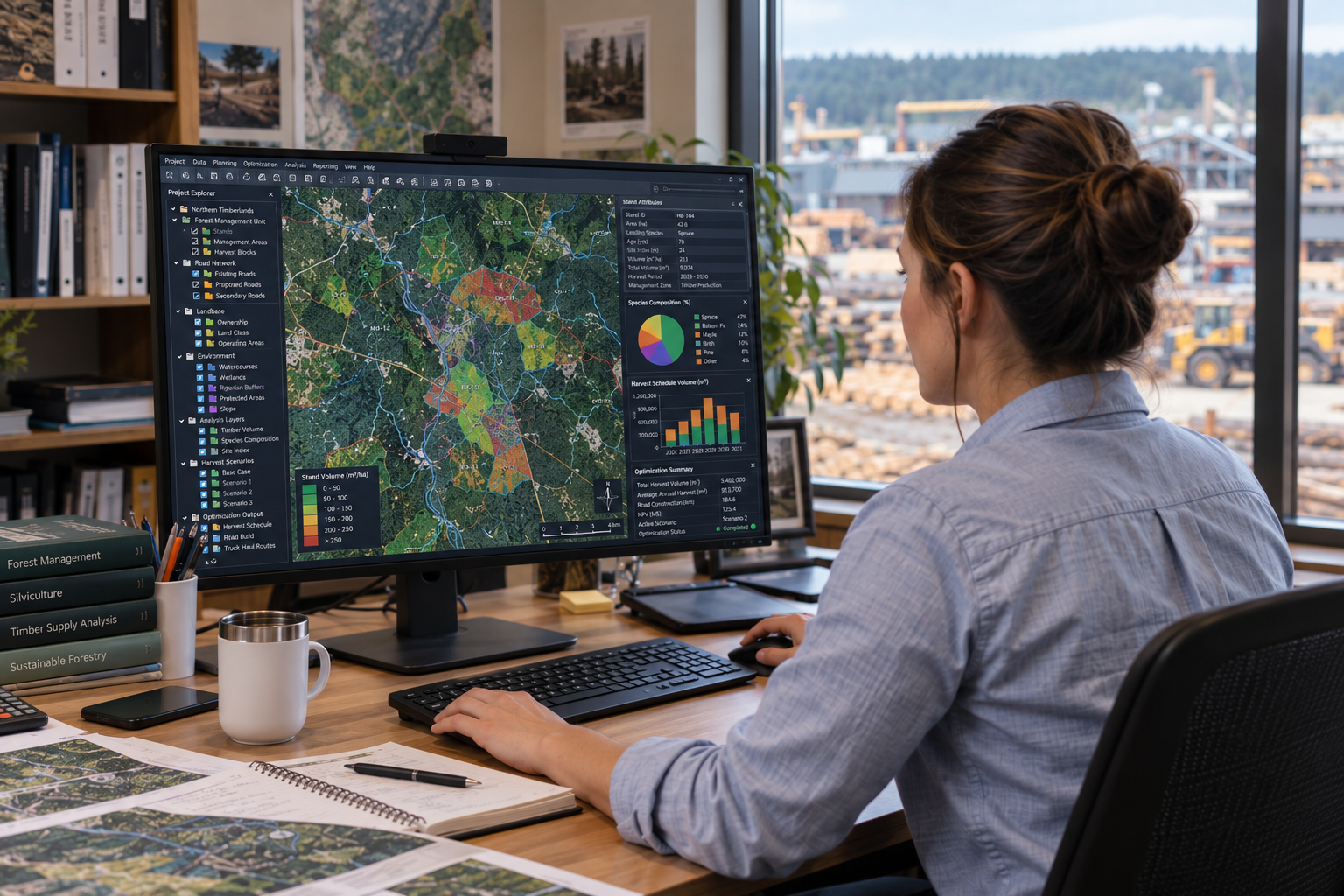
Your harvest plan is only as good as the inventory underneath it. If your planners hedge every volume estimate, or keep their own correction factors in a side spreadsheet, the plan is compromised before it starts.
Researchers have measured this. A study in Silva Fennica modelled inventory errors at levels observed in real Norwegian forest inventories and found they led to incorrectly timed harvests and lost net present value. The largest losses showed up in stands close to their optimal rotation age. Source
In other words, inventory errors cost you most on the stands you're about to cut.
Ask yourself: when your inventory is updated, how long before your planning model reflects it?
2. Your trucks spend more time waiting than moving
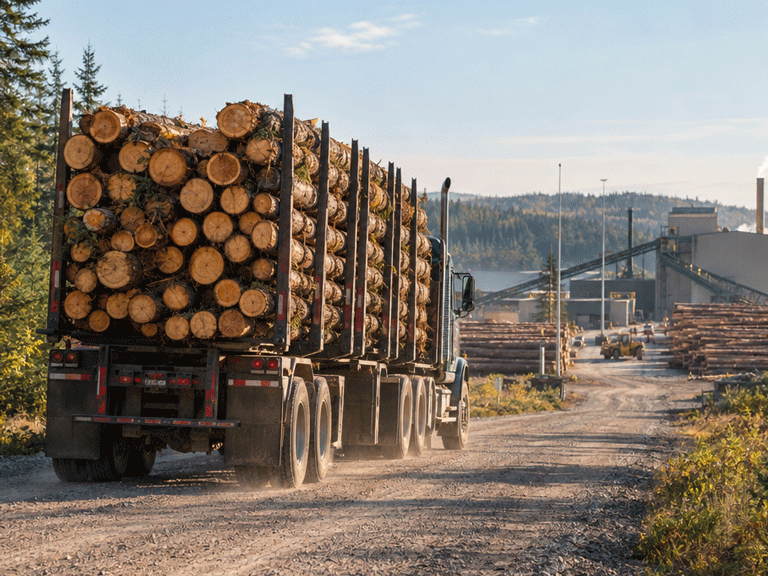
A log truck earns money when it's loaded and rolling. Every minute it sits at a landing or in a mill yard is cost with nothing to show for it.
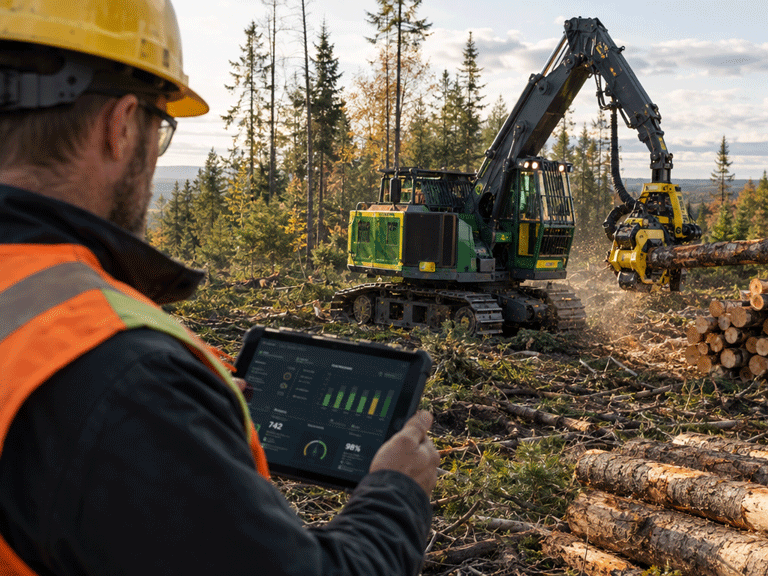
A Virginia Tech time study of log truck turns found trucks sat idle 32% of the time at harvest sites and 27% of the time at mill facilities. At harvest sites, they spent nearly as much time waiting (26%) as being loaded (29%). Source
Waiting is rarely a trucking problem. It usually traces back to a schedule nobody else could see: a crew running behind, a mill intake window that shifted, or a load dispatched without knowing the landing wasn't ready.
When harvest, haul, and mill schedules live in separate places, the truck is where the gap shows up.
3. Your compliance data lives somewhere other than your harvest data
If proving where your wood came from means pulling records from three systems and a filing cabinet, you're carrying risk that grows every year.
The EU Deforestation Regulation (EUDR) applies from December 30, 2026 for large and medium operators and traders, and from June 30, 2027 for micro and small enterprises. Source Operators need a due diligence system that captures plot-level geolocation, supplier identity, production date, and evidence of legality. Source
That information already exists in most forestry operations. It's in the harvest plan, the load tickets, and the stand records. The question is whether it's connected.
Traceability is easy to prove when the record is built as the work happens. It's painful when you rebuild it after someone asks.
4. You collect plenty of data, but it rarely changes a decision
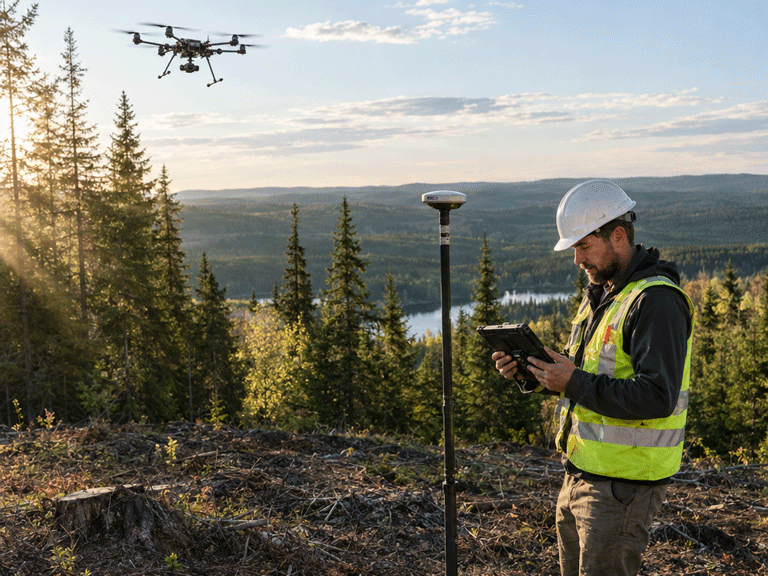
Lidar flights, drone surveys, telematics, field apps. Forestry has never had more ways to capture what's happening on the ground.
But capture isn't the goal. McKinsey's precision forestry research made the point that the shift isn't simply adopting digital technology, and noted that few organizations understood how those technologies translate into real use cases. Source
If your newest data lands in a folder and your plan still runs on last year's numbers, you've paid for the collection without getting the decision.
Data earns its keep when it reaches the plan. Until then, it's storage.
5. Your plan is a document, not a set of scenarios
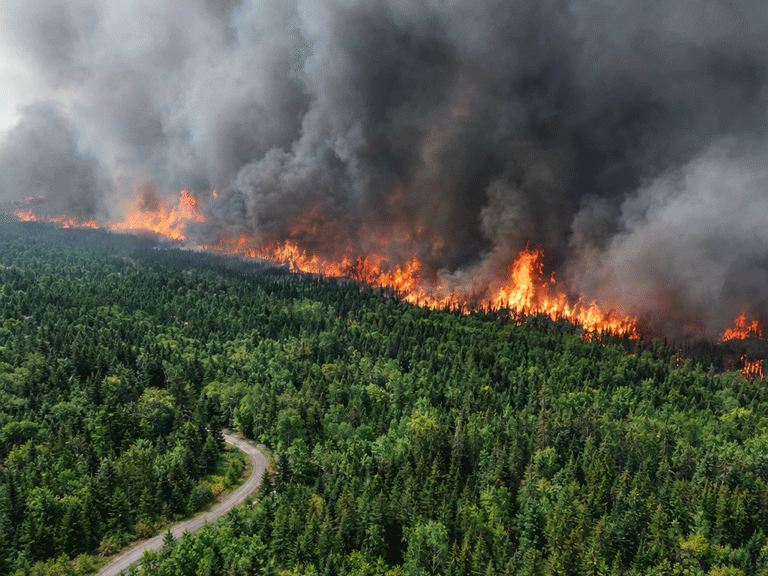
A fire takes out a block you were counting on. A mill announces a curtailment. A market shifts mid-season.
If your answer to any of these is "we'll rebuild the plan," you're replanning from scratch every time conditions change. That takes weeks you don't have.
Planning teams that work in scenarios ask a different question: which of the options we've already modelled fits what just happened? They know the trade-offs before they commit crews, capital, or volume.
A single forecast tells you what should happen. Scenarios tell you what to do when it doesn't.
6. Your planning and operations teams reconcile numbers in spreadsheets

Planning says one volume. Operations reports another. Somebody spends Friday afternoon working out which one is right.
That reconciliation is a symptom. It means your strategic plan and your operational reality are tracked in different places, and the only bridge between them is a person with a spreadsheet.
The cost isn't only the hours. Deviations from plan surface in the weekly report, after the window to correct them has closed.
When planning and operations share the same record, plan versus actual isn't a report you build. It's something you can see.
7. The mill finds out about supply changes after it's too late to adjust
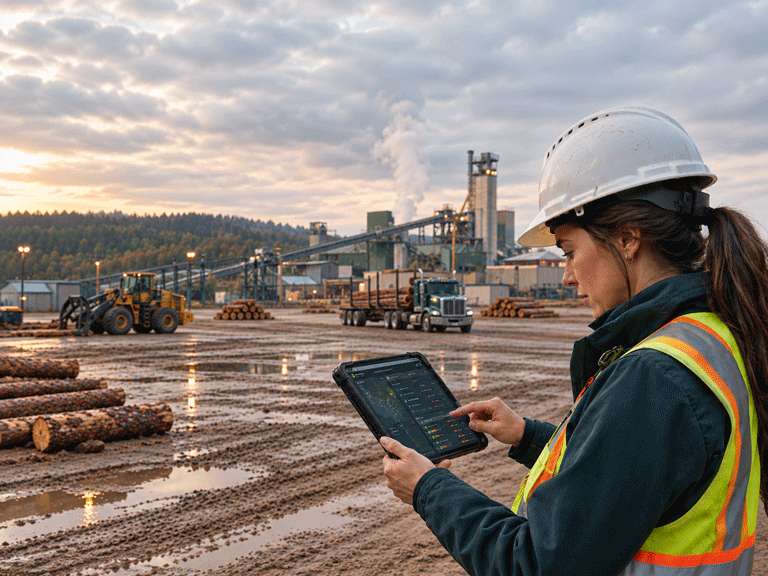
A harvest block is delayed by weather. A road closes. A contractor loses a machine for a week.
The forest knows on Monday. The mill finds out on Thursday, when intake falls short.
By then, the options are expensive: buy fibre on the spot market, reroute loads from another contract, or slow production. Every one of those choices would have been cheaper, or unnecessary, with three days' notice.
Fibre supply problems start in the forest. If the mill can't see the forest, it can only react.