

The Problem with Running Forest Operations from Memory
Most forest operations have a coordination problem they’ve stopped noticing.
A harvester crosses into a setback nobody flagged. A forwarder spends a shift on a road the planner thought was decommissioned. A crew works a block from a map that was current on Monday but is wrong by Thursday. An operator brushes a sensitive area because the prescription update never made it to their tablet.
None of this is a tracking problem. The machines are doing the work. The operators are doing the work. The problem is that the office and the field aren’t coordinating in something close to current time, on something close to the same picture of the forest.
This is what running operations from memory looks like. Decisions in arrears. Coordination by phone call. Compliance teams verify after the fact.
Visibility Isn’t the Point. Control Is.
There’s no shortage of telematics on the market. Generic fleet platforms. Construction-grade GPS. OEM dashboards. Off-the-shelf tracking apps. They all promise to show you where your machines are.
Showing you where a machine is doesn’t solve the problem.
The problem isn’t that you can’t see the harvester. It’s that the harvester is working inside a forest, with a prescription, a boundary, a setback, a road plan, a sensitive area, and an operational sequence that a generic platform can’t interpret. Tracking the vehicle isn’t the same as managing the operation.
The shift the strongest operations are making is from passive visibility to active coordination. From “where is the machine” to “is the machine doing the right thing, in the right place, under the right conditions.” That’s the difference between telematics and field operational awareness: the ability to coordinate harvest activity against the forest itself, not just against a map of dots.
Where Generic Tools Fall Short, Compliance Risk Multiplies
The cost of running operations without field operational awareness shows up first in compliance.
Compliance teams identify boundary overruns weeks later in a desktop review, not when the machine is approaching the line. A sensitive area gets entered because the operator’s reference map didn’t reflect the most recent prescription. A ribbonless block needs constant supervisor verification because the operators don’t have a trusted live reference for where they can and can’t work.
These aren’t tracking failures. They’re coordination failures. A generic telematics platform doesn’t know what a setback is. It doesn’t recognize a sensitive area. It can’t trigger an alarm when a harvester is approaching a wetland, a regeneration buffer, or a stand boundary that isn’t supposed to be touched.
Forestry-specific spatial intelligence does that work. Boundary awareness. Location-based alarms. Ribbonless harvesting support. Sensitive-area protection built into the operator’s view of the world, not bolted on after the shift.
This is the layer that separates a platform built for forestry from a platform built for fleet management and pointed at the bush.
The Coordination Gap Compounds Quietly
Compliance is the most visible cost. The quieter cost is operational coordination.
When the office and the field aren’t working from a shared, near real-time picture, planners build conservative buffers. Supervisors call around to confirm what they could otherwise see. Crews wait on information that the system should have already pushed to them. Planners build logistics decisions on yesterday’s production numbers. Block transitions take longer than they should.
None of this is dramatic. It’s the accumulated drag of operating without operational awareness. Hours lost across a shift. Days lost across a week. Margin lost across a season.
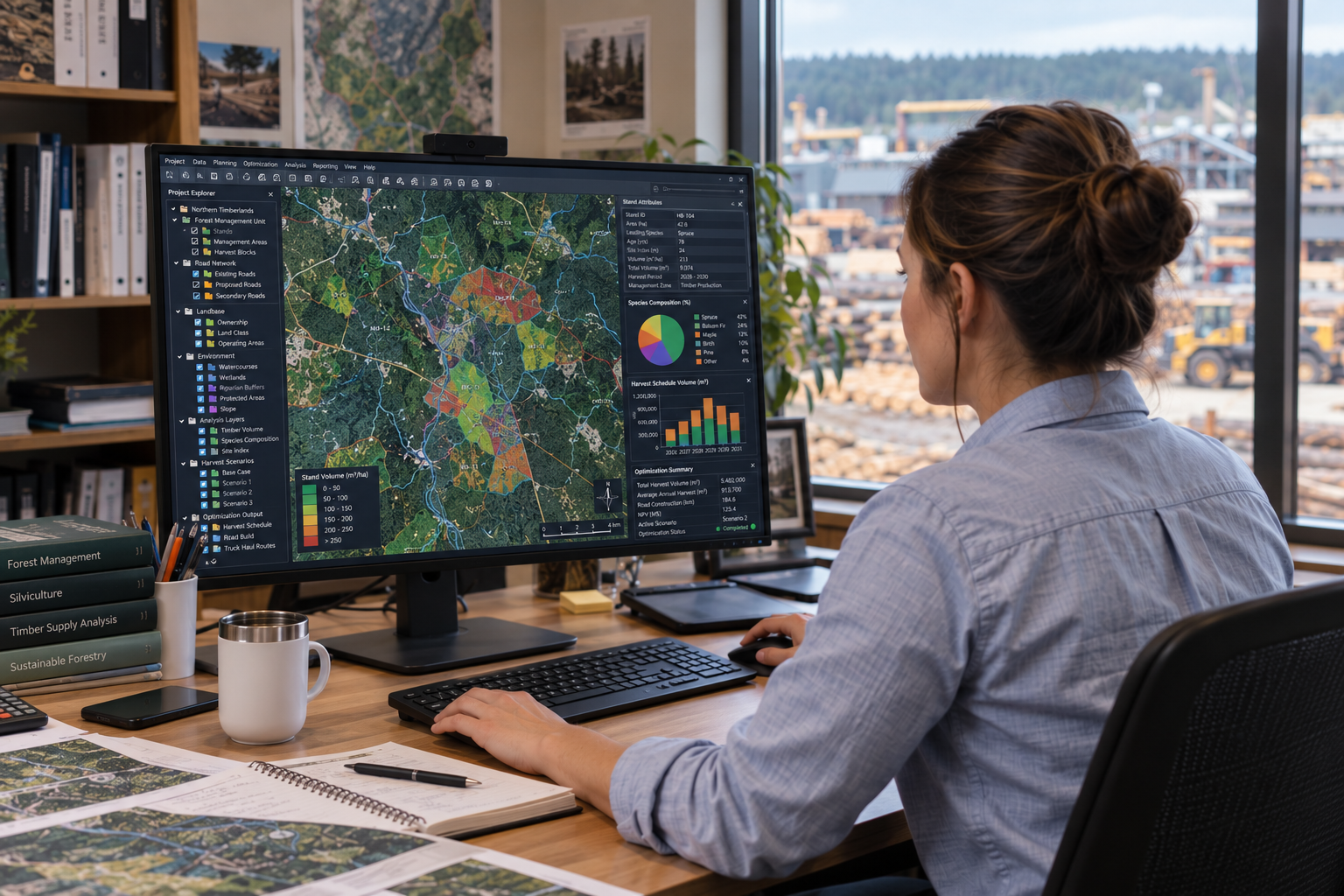
The teams who close this gap don’t do it by adding another tracking layer. They do it by replacing fragmented, consumer-grade tools with a forestry-specific operational platform that combines machine telemetry, geospatial context, production data, operator activity, and field workflows into one system the office and the field both trust.
What Field Operational Awareness Actually Delivers
When forest operations run on field operational awareness, the conversation shifts. Not because the office can finally see the field, but because the office and the field are coordinating on the same operational picture, in something close to current time.
The compliance team isn’t reconstructing a boundary incident after the fact. The system alerted the operator before the line was crossed.
Planners aren’t piecing together what happened yesterday. Production data has already synced and is in the plan.
Supervisors aren’t driving an hour to confirm a crew is working the right block. The block, the boundary, and the prescription are on the operator’s tablet, validated.
The operations leader isn’t running a “trust but verify” model with three contractors and four spreadsheets. The operation is coordinated, traceable, and current.
That’s the shift. From visibility to control. From tracking to coordination. From a map of dots to a forestry-specific operational platform.
See What Field Operational Awareness Looks Like in a Working Operation
On June 23, Chantiers Chibougamau will share how they moved from fragmented, consumer-grade tracking to a standardized, forestry-specific operational platform across their harvest operations.
Loydy Brousseau, Team Leader, Forest Planning and Dave Lepage, Corporate Director, Forestry and Supply will walk through what changed, what it took, and what it has meant for their compliance, coordination, and operational confidence. Simon Ketcheson, Product Manager from Remsoft joins them.
If any of this sounds familiar, the session is worth your time.
Register for the webinar →
Or book a walkthrough to see what field operational awareness looks like in a working forestry operation today.