Mondi Group, a global leader in packaging and paper, faced a common challenge: a market growing more complex and operations harder to plan. To respond, the company set out to modernize its forestry planning.
Managing over 250,000 hectares of plantation land in South Africa, an environment marked by market volatility and logistical constraints, Mondi recognized the need for a more structured, data-driven approach to planning. The solution lay in capturing a digital model of their supply chain with capabilities to optimize both strategic and tactical planning across their operations, improve decision-making and enhance adaptability.
The Challenge: Disconnected Systems and Manual Planning
Like many other organizations, Mondi’s forestry planning was constrained by disconnected systems and manual processes, limiting their ability to analyze data, forecast trends and adapt to changing conditions. Decision-making relied on subjective interpretations of operational and financial data.
This led to challenges in managing market changes, transportation logistics, and operational efficiency. Louis van Zyl, Fibre Resources Manager at Mondi, explains, “We needed an approach that would allow us to integrate data across operations and assess the financial impact of different decisions with greater precision.”
A New Approach: Building a Digital Model of the Value Chain
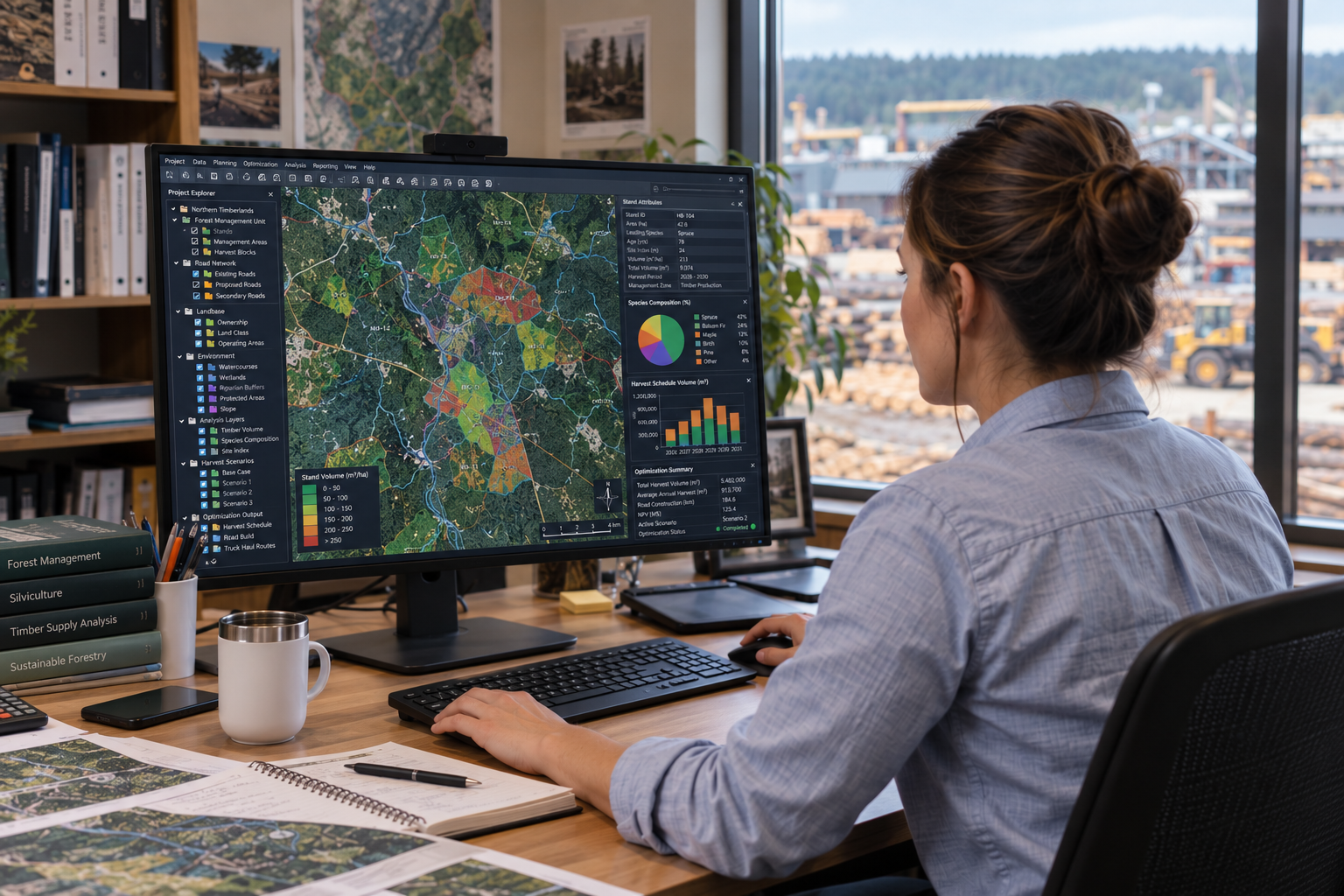
Recognizing the need for a more structured and integrated solution, Mondi partnered with Remsoft to develop a digital model of their forestry value chain using Woodstock Optimization technology. The model integrated operational data, financial projections, and resource allocation variables, creating a comprehensive view of their operations.
From there, the team can develop scenarios based on various market and environmental conditions, and assess the impact of decisions on wood flow, transportation methods, and harvesting schedules. This provides valuable insights into optimizing resources use while reducing costs and risks.
“We took a thoughtful, phased approach,” said van Zyl. “Our focus was on ensuring that each step added value while keeping the team engaged and aligned with the larger goals. This was key to successful change management and making sure we got buy-in from all stakeholders.”
Data-Driven Decisions, Grounded in Reality
Mondi’s data integration and structured approach to planning optimization allows them to:
Analyze various harvesting capacities and logistical constraints to optimize harvest schedules and transportation routes.
Improve wood flow and transportation methods under different market conditions.
Perform financial scenario analysis to evaluate long-term strategies, such as whether to plant pine or eucalyptus based on market demand.
Adapt to logistical constraints, such as balancing rail and road transportation while minimizing costs.
Continuously updated with real-world data, the model enables Mondi to recalibrate their planning based on the latest insights and market conditions. “We can now visualize and measure the impact of our decisions in ways we couldn’t before,” van Zyl noted. “The model doesn’t just provide data, it gives us actionable insights.”
Agility and Precision in Forestry Operations
The optimization model has yielded several key benefits, and longer term it supports Mondi’s ability to continually optimize resource use while lowering costs:
- Optimized Resource Allocation: Mondi can now analyze different harvesting schedules and transportation methods, providing clear insights into how to best balance costs and operational efficiency.
- Data-Driven Decision Support: By integrating financial data directly into the model, Mondi’s decision-makers have greater visibility into the long-term impacts of their choices, improving both short-term agility and long-term planning.
- Stronger Alignment Across Teams: The process also brought finance and operations teams closer together, ensuring a unified approach to decision-making and planning.
“The insights we gain can help us align short-term actions with long-term strategies,” said van Zyl. “The ability to assess different scenarios is invaluable. We can see the impact of various decisions on costs and wood flow, giving us the ability to adapt to market changes without sacrificing long-term sustainability.”
A Foundation for the Future: Continuous Improvement
Mondi sees the model as a foundation for continuous improvement. As they refine the system and integrate new data, the company plans to explore optimization opportunities in day-to-day operational planning, further enhancing the resilience and efficiency of their supply chain.
“Our goal is continuous improvement,” van Zyl emphasized. “We see this as an evolving process, with the potential to further streamline our operations and reduce costs as we go.”